CopthornePrimary School
Telephone: (01274) 501460 - Email: office@copthorneacademy.co.uk
At Copthorne, we want every child to become a confident, fluent writer. Our approach to writing is carefully sequenced from EYFS to Year 6, so pupils build strong foundations in handwriting, spelling, composition and transcription. Children write every day, with clear teaching, regular practice and engaging purposes for writing.
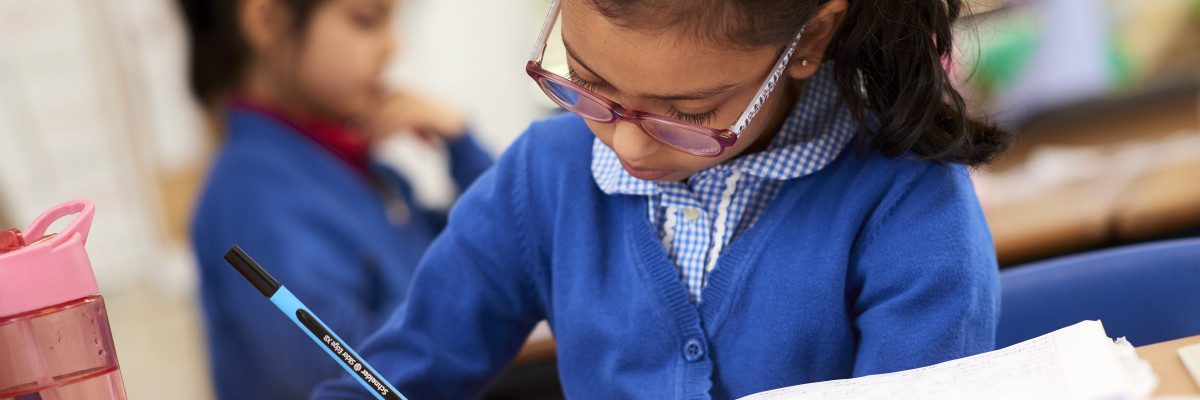
Across school, writing is taught in small, manageable steps. Teachers model writing clearly, demonstrating letter formation, spelling and sentence construction so children can see exactly what good writing looks like. Pupils then have plenty of opportunities to practise these skills, both in short bursts and in longer pieces of writing. We use “ready‑to‑write” routines that help children prepare physically and mentally for writing. This includes warm‑ups to strengthen fine‑motor control and reminders about posture, pencil grip and using the non‑writing hand to steady the paper. Staff gently challenge unusual pencil grips and support children to develop habits that lead to fluent, comfortable writing. Where children need extra practice, we provide it promptly through targeted support and high‑quality modelling from adults.
In Early Years, we focus on the foundations that make successful writing possible later on:
Reception
When children start Reception, handwriting and spelling are taught explicitly from the outset so they can become automatic. This frees up working memory for composition.
Year 1
Year 2
In Key Stage 2, children continue to practise handwriting regularly so it becomes increasingly fluent. They develop stamina for longer pieces of writing, edit and refine their work, and apply grammar in context rather than in isolation.
By Year 6, pupils are expected to maintain legible, joined handwriting even when writing at speed.
A broad range of exciting and high quality texts are used to support these sequences of learning, according to the whole school long term plan for writing.